You've done everything right. You made the appointment, asked the questions, maybe even printed a list. Your OB walked you through prenatal vitamins, cycle tracking, and timing. She was thorough. She cared.
And she probably said almost nothing about him.
It's not a criticism. It's just the reality of how fertility care is structured in this country. For most couples, the OB or midwife is the first and often only stop. A referral to a reproductive endocrinologist typically doesn't happen until six months to a year of trying without success. A referral to a urologist or men's health specialist for sperm evaluation is even rarer, and even later. Most couples never get there at all.
Which means the window between "we're thinking about starting a family" and "something might be wrong" is largely unguided. And almost entirely focused on her.
Half the equation, a fraction of the conversation
Male factor infertility contributes to roughly 40 to 50 percent of all conception difficulties, a statistic that has been stable in the research for decades. And yet a 2021 survey found that fewer than 30 percent of men had ever discussed fertility health with any doctor. Not because they weren't curious. Because no one brought it up.
Here's what makes that gap even more significant: sperm quality has been declining globally for fifty years. A landmark meta-analysis published in Human Reproduction Update found that sperm counts among men in Western countries dropped more than 50 percent between 1973 and 2011. More recent data suggests the decline is continuing. Researchers point to endocrine-disrupting chemicals, sedentary lifestyles, ultra-processed diets, and heat exposure as contributing factors. The trend is documented, ongoing, and largely absent from the standard fertility conversation couples have with their doctors.
Your partner is not automatically immune to it. And his equivalent of that first OB appointment isn't coming unless someone makes it happen.
Sperm health is more dynamic than most people know
One of the most useful and undershared facts about male fertility: sperm are not static. They are continuously produced in a cycle that takes approximately 64 to 74 days from start to finish. The sperm in play when you are actively trying to conceive were being formed two to three months earlier. What your partner was eating, drinking, stressing about, and supplementing during that window has a direct and measurable effect on the cells you are counting on.
That is not a reason to panic. It is a reason to start early.
It is also worth understanding that conception success is not only about sperm count. Motility, meaning how efficiently sperm swim toward an egg, matters enormously. Morphology, the shape and structural integrity of each sperm cell, affects whether fertilization can happen at all. DNA fragmentation, which does not show up on a standard semen analysis, is increasingly recognized as a driver of both failed fertilization and early pregnancy loss. A man can have a completely normal semen analysis and still have meaningful fertility challenges. The standard test does not tell the whole story, and most men never get even that far.
The nutrients that actually move the needle on sperm health
This is where most men have real and addressable opportunity. The nutritional side of male fertility is genuinely responsive to change in ways that other factors are not.
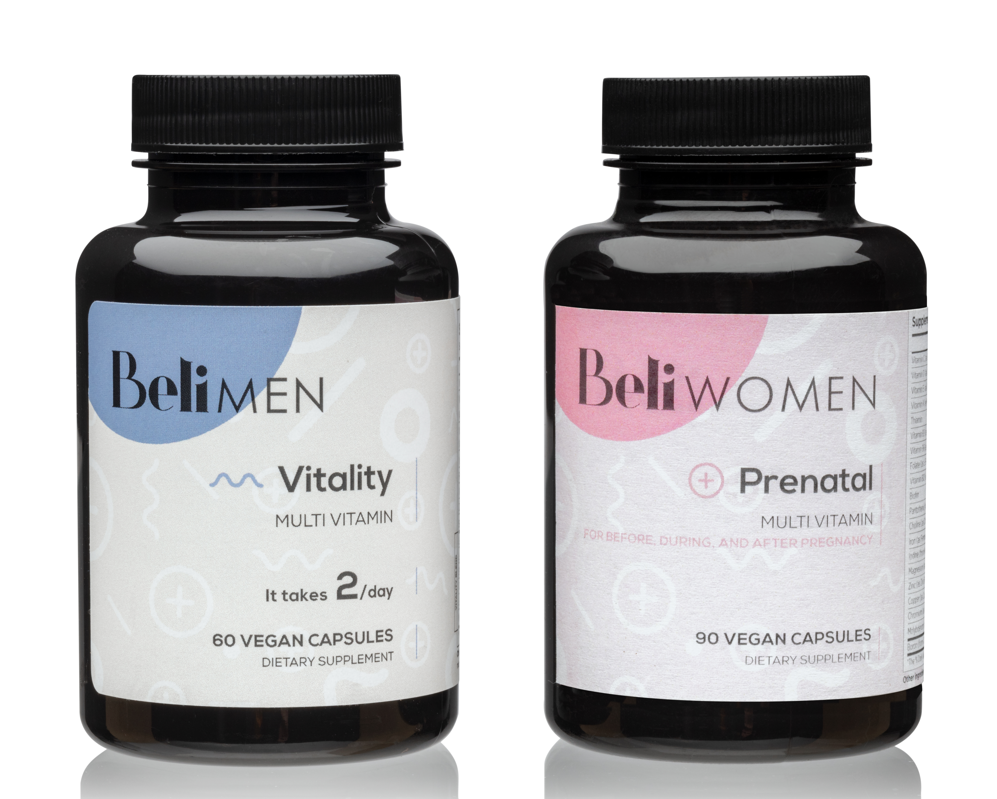
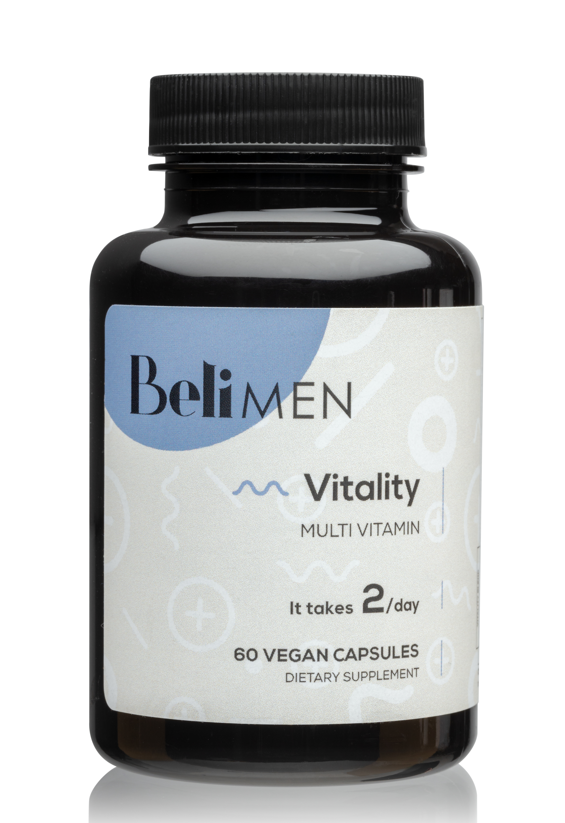
What makes Beli for Men different from a general multivitamin or even a standard prenatal is the Vitality Blend, a proprietary combination of ingredients specifically chosen for male reproductive health, energy, and testosterone support. These are not nutrients you will find in most off-the-shelf supplements. They are included here because the research on sperm health demanded them.
Folate (as L-5-MTHF) for men — This one surprises most couples. Folate is not only a pregnancy nutrient for women. It is critical for sperm DNA synthesis in men, and low folate has been associated with higher rates of chromosomal abnormalities in sperm. Beli for Men uses the methylated form, L-5-MTHF, which is significantly more bioavailable than the synthetic folic acid found in most supplements.
Vitamin D3 at 2000IU — Sperm cells have vitamin D receptors, which reflects how directly this nutrient is involved in reproductive function. Deficiency affects an estimated 40 percent of American adults and is associated with reduced motility and lower testosterone. It is a quiet variable in a significant number of unexplained fertility cases.
Vitamin E (as d-alpha Tocopheryl) — A fat-soluble antioxidant that protects sperm cell membranes from oxidative damage. At 893% of daily value, this is a therapeutic dose, not a token inclusion.
Zinc (as amino acid chelate) — Essential for testosterone synthesis and the entire process of sperm development. Studies consistently link zinc deficiency to reduced sperm count, impaired motility, and increased rates of abnormal morphology. It is one of the most well-documented connections in male reproductive nutrition. The chelated form improves absorption over standard zinc oxide found in most multivitamins.
Selenium — Works synergistically with Vitamin E to protect sperm from oxidative stress and supports healthy sperm morphology. Often overlooked, consistently supported by research.
CoQ10 for sperm health — A powerful antioxidant concentrated in the mitochondria of sperm cells. CoQ10 supports motility and protects against oxidative stress, which is one of the primary drivers of DNA fragmentation. Levels decline with age and most men get negligible amounts from food alone.
L-Carnitine and sperm energy — Sperm are among the most energy-dependent cells in the human body. L-Carnitine plays a direct role in sperm cell metabolism, and studies have shown meaningful improvements in both motility and morphology in men with deficiencies.
L-Arginine — An amino acid that supports healthy blood flow and is involved in sperm production. It is a precursor to nitric oxide, which plays a role in overall reproductive function.
Shilajit extract (250mg) for male reproductive health — A mineral-rich compound used in Ayurvedic medicine for centuries, shilajit has solid modern research behind it. Clinical studies have shown it can significantly increase total sperm count, motility, and testosterone levels. It also contains fulvic acid, which supports nutrient absorption and reduces oxidative stress at the cellular level. At 250mg this is a meaningful therapeutic dose, not a label claim.
L-Taurine — An amino acid that supports antioxidant defense in sperm cells and has been shown to improve motility. Often absent from fertility formulations entirely.
N-Acetyl-L-Cysteine (NAC) — A precursor to glutathione, the body's most powerful internal antioxidant. NAC helps neutralize the oxidative stress that degrades sperm DNA, motility, and morphology. Another ingredient you will not find in a standard multivitamin.
Beli for Men was formulated around this research. The Vitality Blend alone contains ingredients that most general prenatals and wellness supplements do not include at all, let alone at doses that actually move the needle. This is not a blue label multivitamin. It is a targeted formulation built specifically around what sperm health, testosterone support, and male reproductive performance require.
The conversation worth having before anything else
Most couples trying to conceive never see a fertility specialist. For many, the OB is the whole care team. That is not a failure. It is just where the system starts, and for a lot of people it is where it stays.
The proactive choices happen outside the clinic. In the daily routine. In what both partners decide to do in the 90-day window before they are actively trying, or the moment they decide they are ready to take this seriously.
Bring him into the fertility conversation from the beginning. Not because fertility is his problem to solve, but because trying to conceive is a shared project with better outcomes when both partners are prepared. The research supports it. The biology supports it.
Your OB will cover a lot of ground at that first appointment. Sperm health, male fertility nutrition, and his role in conception outcomes are yours to get ahead of together.
Beli for Women and Beli for Men are formulated together for couples who want to give this every possible advantage. Build the routine that covers both of you.