“Maxxing” has gone mainstream. Dictionary.com named it its 2026 Word of the Year, and Merriam-Webster now has an entry for “looksmaxxing”—a pursuit of physical attractiveness that can involve extreme or dangerous measures.
We have a word for optimizing almost everything: looks, sleep, fiber, longevity. But when it comes to preparing for pregnancy, the man’s side is still too often treated as an afterthought.
What if the next “maxxing” trend focused on something that matters far beyond a selfie? Spermmaxxing.
No, it does not mean freezing your testicles, taking a mystery stack from a guy at the gym, or trying to “hack” your way to superhuman sperm. Real spermmaxxing is less extreme and far more useful.
Spermmaxxing means using the roughly 90 days before conception to support the environment in which sperm develops, remove avoidable risks, and get actual information about your reproductive health.
It is the male side of preconception care, and it is long overdue.
Why spermmaxxing starts three months before conception
Men produce sperm continuously, but not instantly. A full cycle of sperm development takes about 74 days. The sperm then undergoes additional maturation before ejaculation. That creates a practical preparation window of roughly three months.
In other words, the sperm involved in conception did not appear that morning. It developed over the weeks before it.
Researchers at the National Institute of Environmental Health Sciences have described the 74-day sperm-development period as an important male preconception window. It is why waiting until the positive ovulation test, the fertility appointment, or the night before an egg retrieval is far too late to begin thinking about sperm health.
Women are routinely told to prepare before pregnancy. Men need a runway too.
What are you actually trying to “maxx”?
A semen analysis typically looks at several measures, including:
-
Sperm concentration: how many sperm are present in a given volume of semen
-
Motility: how well sperm move
-
Morphology: the percentage of sperm with a typical shape
-
Semen volume: the amount of fluid in the sample
-
Total motile sperm count: the total number of moving sperm in the sample
These numbers matter, but a semen analysis is not a simple pass-or-fail fertility test. Semen parameters naturally vary between samples, and no single number can guarantee whether conception will or will not happen.
That is why spermmaxxing should begin with data, not assumptions.
The evidence-aware spermmaxxing plan
1. Test. Do not guess.
You can feel healthy, have normal testosterone, and have no obvious symptoms while still having an abnormal semen parameter. You can also receive one abnormal result that looks different when the test is repeated.
The American Urological Association and American Society for Reproductive Medicine recommend that the initial male fertility evaluation include a reproductive history and one or more semen analyses. When an initial result is abnormal, repeat testing is often important because semen measurements can vary substantially from one sample to the next.
A test gives you a baseline. If something is off, a reproductive urologist or other qualified clinician can determine whether further evaluation is needed.
2. Remove the obvious sperm saboteurs.
There is no perfect fertility lifestyle, but a few exposures deserve serious attention.
Stop smoking. Cigarette smoking has been associated with reductions in sperm concentration, motility, and morphology. Nicotine products and vaping should not be treated as fertility-neutral just because they do not involve a traditional cigarette.
Support testosterone. Do not confuse that with adding testosterone. Your body's own testosterone is essential for normal sperm production. The testes require high local concentrations of testosterone to develop and mature sperm.
TRT is different. When testosterone enters the body through injections, gels, pellets, or other therapies, the brain can interpret that as a signal to reduce the hormones that tell the testes to make testosterone and sperm. As a result, TRT and anabolic steroids can sharply reduce sperm production and, in some men, stop it altogether.
This is the key distinction: healthy testosterone supports sperm, but taking external testosterone can suppress it. A higher blood testosterone level on TRT does not automatically mean better fertility. It may mean the opposite.
Current AUA/ASRM guidance states that testosterone monotherapy should not be prescribed to men interested in current or future fertility. If you have symptoms of low testosterone and want children now or later, tell your prescribing clinician before beginning TRT and consider speaking with a reproductive urologist about fertility-preserving options. If you already use prescribed testosterone, do not stop it on your own.
Limit excessive alcohol and be honest about recreational drug use. The evidence is not equally strong for every substance, but your clinician needs the full picture to give useful advice.
Review medications and medical history. Previous testicular injury, surgery, chemotherapy, infections, sexual-function concerns, varicocele, hormonal issues, and certain medications may warrant earlier evaluation.
This is not about purity. It is about identifying the factors big enough to matter.
3. Be smart about heat, not weird about it.
The testes sit outside the body for a reason: sperm production is temperature-sensitive.
Recent research has added evidence that heat exposure during sperm development may affect the sperm epigenome, although this field is still developing and the findings do not prove that every hot day or sauna session causes infertility.
A reasonable approach while trying to conceive is to reduce frequent, prolonged heat exposure when practical. That may mean taking a break from regular hot tubs or long sauna sessions and avoiding hours with a hot laptop directly on your lap. It does not mean icing your testicles or buying unproven cooling gadgets.
4. Build the boring foundation that algorithms skip.
The internet rewards novelty. Biology usually rewards consistency.
Aim for a varied diet built around whole foods, including fruits, vegetables, quality protein, healthy fats, and fiber-rich carbohydrates. Move your body regularly. Work toward a weight that supports your overall health. Protect your sleep. Keep alcohol minimal to moderate while trying to conceive.
The evidence connecting any single food, workout, or sleep target to pregnancy is limited. These habits support general health and may help create a more favorable foundation for reproductive health without requiring an extreme protocol.
5. Fuel sperm health with targeted nutrients.
Every stage of sperm development depends on nutrition. During the roughly 74-day sperm cycle, the body uses vitamins, minerals, antioxidants, and amino acids to produce and mature sperm, fuel their movement, support their genetic material, protect them from oxidative stress, and maintain the hormonal environment required for healthy sperm production.
Targeted nutrients support sperm health in powerful, complementary ways:
-
CoQ10 and L-carnitine support the cellular energy sperm need for healthy motility.
-
Zinc, selenium, folate, and vitamin B12 support normal sperm production, maturation, cell division, and DNA synthesis.
-
Vitamins C and E and N-acetyl-L-cysteine support antioxidant defenses that help protect developing sperm from oxidative stress.
-
Vitamin D, zinc, and shilajit support healthy testosterone levels and normal male reproductive function.
Together, these nutrients provide broad support for the markers that matter in sperm health, including count, motility, morphology, development, DNA integrity, and antioxidant protection.*
The real advantage comes from consistency. Because sperm develops over approximately three months, daily nutritional support throughout that window gives the body a steady supply of the nutrients it uses at every stage of the process.
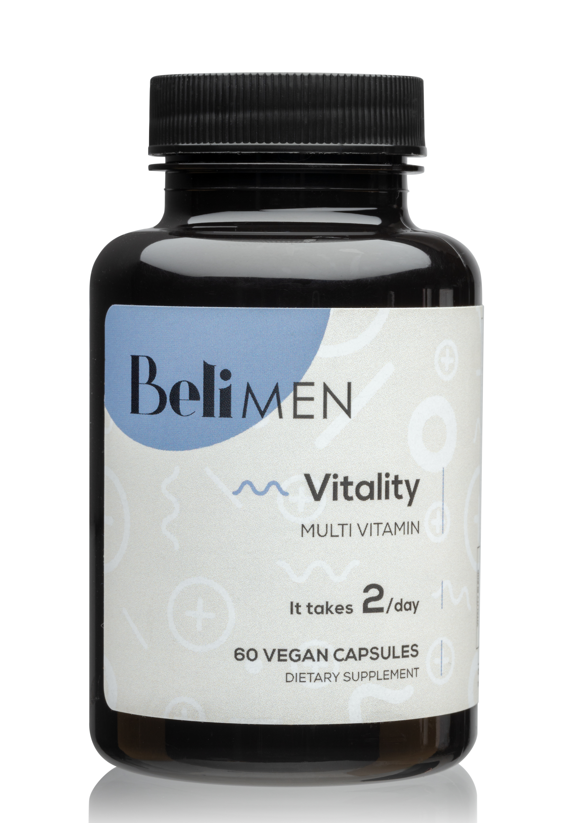
Beli Vitality for Men was formulated around this biology. It brings clinically studied nutrients together in one comprehensive daily formula designed specifically to support men's fertility, sperm health, and healthy testosterone levels.*
This is spermmaxxing from the inside out: giving your body targeted nutritional support every day while the next generation of sperm is being built.
6. Do not confuse abstinence with optimization.
Saving up sperm for weeks is not a fertility strategy. ASRM notes that long abstinence intervals can worsen semen parameters, while frequent ejaculation does not reduce fertility in men with normal semen quality.
For couples trying to conceive through intercourse, reproductive efficiency is generally highest with sex every one to two days during the fertile window. The goal is not to hoard sperm. It is to have sperm available when the egg is.
What spermmaxxing is not
Spermmaxxing is not:
-
Taking testosterone because “more testosterone must mean more fertility”
-
Combining a dozen supplements at random
-
Practicing prolonged semen retention
-
Icing the testicles
-
Obsessing over one semen-analysis number
-
Waiting until fertility treatment begins to care about sperm
-
Blaming yourself or your partner when conception takes time
Real optimization includes knowing when a problem needs medical care. If you receive an abnormal semen analysis, have known reproductive risk factors, or have been trying without success, do not let a wellness routine delay an evaluation.
The simplest spermmaxxing plan
If pregnancy, embryo freezing, or sperm freezing may be in your future, work backward at least 90 days.
Day 1: Review medications, smoking, alcohol, drugs, heat exposure, diet, and current supplements. Consider a baseline semen analysis.
Days 1–90: Follow the plan consistently. Do not chase a new fertility hack every week.
Around Day 90: Repeat testing if your clinician recommends it. Use the results and your medical history to decide what comes next.
The point is not perfection. The point is participation.
For decades, preconception preparation has been treated like a woman’s job. Spermmaxxing turns the male partner from a bystander into an active part of the plan.
That is one trend worth keeping.
Start your 90-day foundation
Beli Vitality for Men was formulated specifically for the male preconception window. It combines nutrients including CoQ10, L-carnitine, zinc, selenium, folate, vitamins C, D, and E, and more to support sperm production, motility, development, and antioxidant protection.*
Start before you start trying.
Frequently asked questions
What is spermmaxxing?
Spermmaxxing is a practical, roughly 90-day preconception plan focused on supporting sperm health, reducing avoidable risks, and obtaining appropriate fertility testing. It brings men's health and preparation into the conception plan from the beginning.
Can sperm health change in 90 days?
Sperm develops over approximately 74 days, followed by additional maturation. That makes three months a biologically relevant window for changing habits and exposures. Whether semen parameters change, and by how much, depends on the person and the cause of any abnormality.
Does testosterone improve sperm count?
Your body's naturally produced testosterone is essential for normal sperm production. TRT is different. Testosterone taken from outside the body can suppress the hormonal signals that tell the testes to produce sperm, causing sperm production to fall sharply or even stop. A higher testosterone level on TRT does not mean greater fertility. Men interested in current or future fertility should discuss their symptoms and fertility goals with a qualified clinician before starting testosterone therapy.
What is the role of a men's fertility supplement?
A men's fertility supplement provides targeted nutrients that support normal sperm production, development, motility, antioxidant defenses, healthy testosterone levels, and overall reproductive health. Because sperm develops over roughly three months, consistent nutritional support across the full development window matters. Beli Vitality for Men was formulated specifically to provide that foundation.
Should both partners prepare before conception?
Yes. Sperm supplies half of an embryo’s genetic material, and both partners should be included in preconception planning and, when appropriate, fertility evaluation.
-
National Institute of Environmental Health Sciences: The 74-day male preconception window
-
AUA/ASRM guideline, Part II: Treatment and nutraceutical guidance
-
Human Reproduction: Heat exposure during spermatogenesis and sperm epigenetic age
*These statements have not been evaluated by the Food and Drug Administration. This product is not intended to diagnose, treat, cure, or prevent any disease. This article is for educational purposes and is not a substitute for individualized medical advice. Consult your healthcare provider before beginning any supplement or making changes to pre